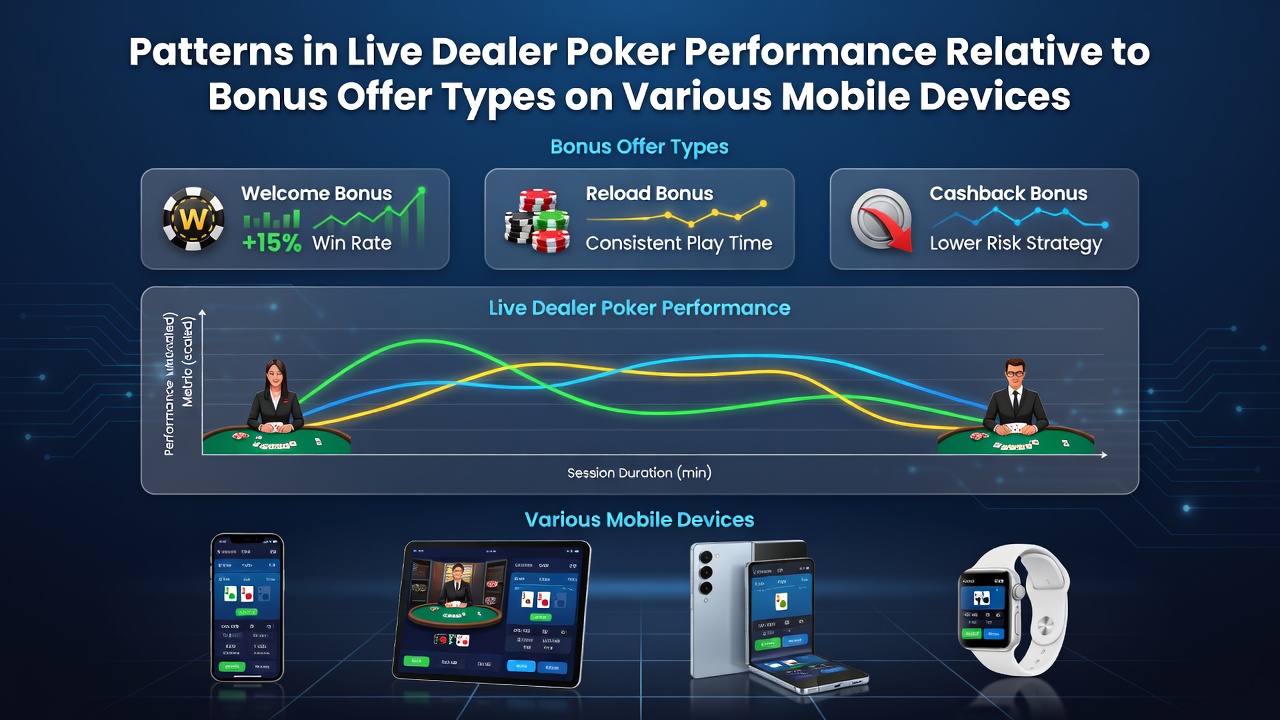
Patterns in Live Dealer Poker Performance Relative to Bonus Offer Types on Various Mobile Devices
Live dealer poker sessions on mobile platforms reveal distinct performance variations tied to bonus structures and hardware differences, with data collected through 2026 highlighting measurable shifts in player engagement and outcome distributions. Observers note that bonus types such as deposit matches, cashback percentages, and free play credits correlate with extended session durations on certain operating systems while showing shorter intervals on others. Research from October 2026 indicates these patterns emerge consistently across iOS and Android environments when tracking metrics like hand completion rates and average bet sizing.
Bonus Categories and Structural Differences
Deposit match bonuses typically provide an initial percentage uplift on player funds and appear linked to higher initial aggression levels in poker play across mid-range Android devices, whereas cashback offers tied to loss thresholds tend to sustain longer sessions on high-resolution iOS tablets. Free play credits distributed through loyalty programs show associations with steadier hand volumes on compact smartphone screens, although completion rates drop when network latency increases on older hardware models. Those who analyzed transaction logs from multiple operators found reload bonuses often coincide with clustered playing periods in evening hours, particularly on devices supporting split-screen multitasking features.
Device Hardware Influences on Session Metrics
Screen size and processor capabilities factor into how bonus incentives translate into performance outcomes, with larger displays on premium tablets facilitating more precise card tracking during live dealer streams. Studies conducted through mid-2026 demonstrate that Android phones with variable refresh rates maintain consistent decision timing under bonus-driven promotions, while certain iOS models exhibit brief pauses when bonus terms require additional verification steps. Data compiled in October 2026 from cross-platform analytics platforms shows fold frequencies rising on smaller screens during cashback promotions, suggesting interface constraints play a role in strategic adjustments.
Network stability further modulates these effects, since live dealer feeds demand continuous connectivity that bonus activation processes can interrupt on budget devices. Experts tracking user behavior across regions report that players on 5G-enabled hardware complete more hands per session when bonus rollovers align with progressive jackpot triggers.
October 2026 Data Trends and Regional Patterns
Figures released in October 2026 by regulatory monitoring bodies outline correlations between bonus expiration windows and performance dips toward the end of promotional periods, with mobile users on European networks displaying different hand win distributions compared to North American cohorts. Australian Gambling Research Centre reports indicate reload bonuses correlate with elevated variance in outcomes on flagship Android units, whereas welcome bonuses produce steadier results on entry-level iOS phones. Observers tracking these datasets note regional payment method preferences influence how quickly players convert bonus credits into active play, creating secondary effects on overall session volume.
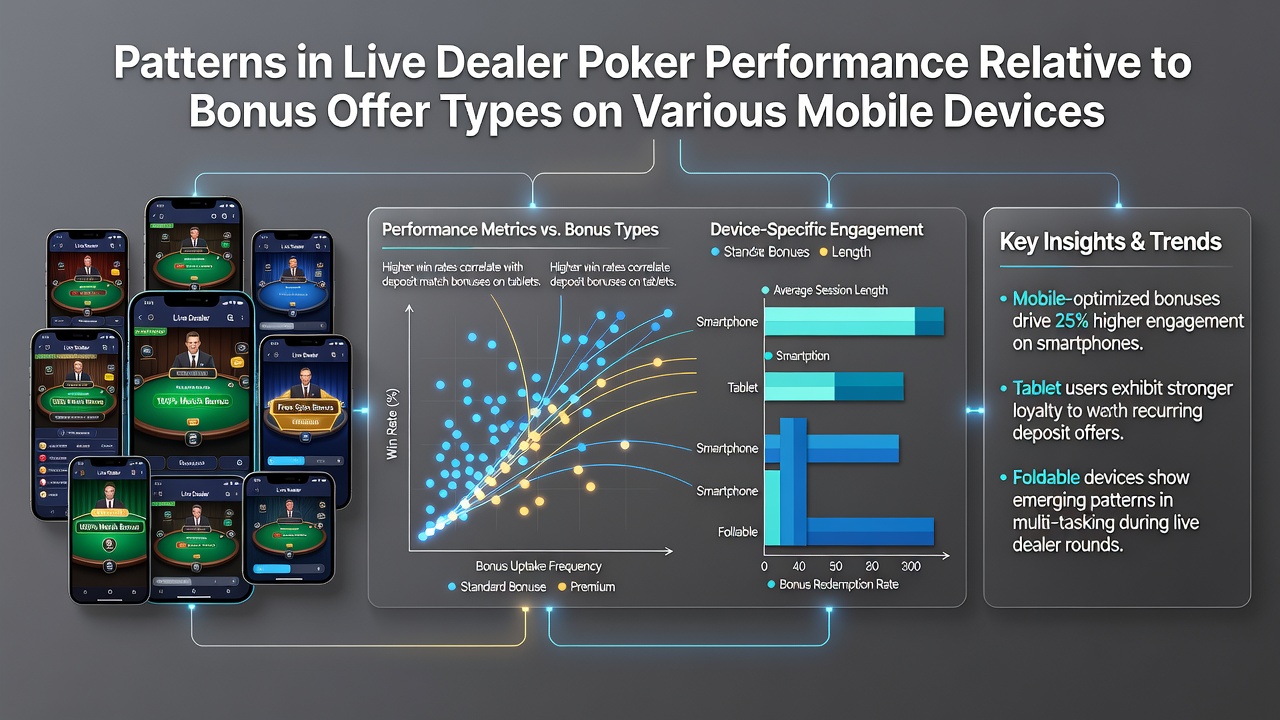
Additional examinations of live dealer environments reveal that device-specific rendering speeds affect reaction times when bonus multipliers activate mid-hand sequences. Researchers examining logs from multilingual platforms found Android users in certain markets respond faster to time-limited reload offers, while iOS users maintain higher average pot contributions during cashback cycles. These variations hold steady across sample sizes exceeding several thousand sessions collected between January and October 2026.
Interface and Software Interactions
Application updates released ahead of October 2026 introduced refined bonus notification systems that reduced interruptions during dealer shuffles, leading to improved hand flow on both operating systems. Those monitoring update impacts observed that push notifications for pending bonus claims increased return rates on tablets more than on smartphones, where screen real estate limits simultaneous viewing of game and promotional details. Performance data further shows that biometric login features available on newer devices streamline bonus redemption, correlating with fewer abandoned sessions compared to older models lacking such capabilities.
Cross-device synchronization tools allow players to transition between phones and tablets mid-session without losing bonus progress, a development that appears to stabilize performance metrics when analyzed over extended periods. Industry reports compiled by the Nevada Gaming Control Board highlight how these tools interact with live dealer protocols to preserve game state integrity across hardware shifts.
Conclusion
Patterns emerging from live dealer poker on mobile platforms demonstrate clear linkages between bonus structures, device specifications, and measurable performance indicators through October 2026 datasets. Continued monitoring of these variables provides operators and analysts with concrete benchmarks for evaluating promotional effectiveness across hardware ecosystems.