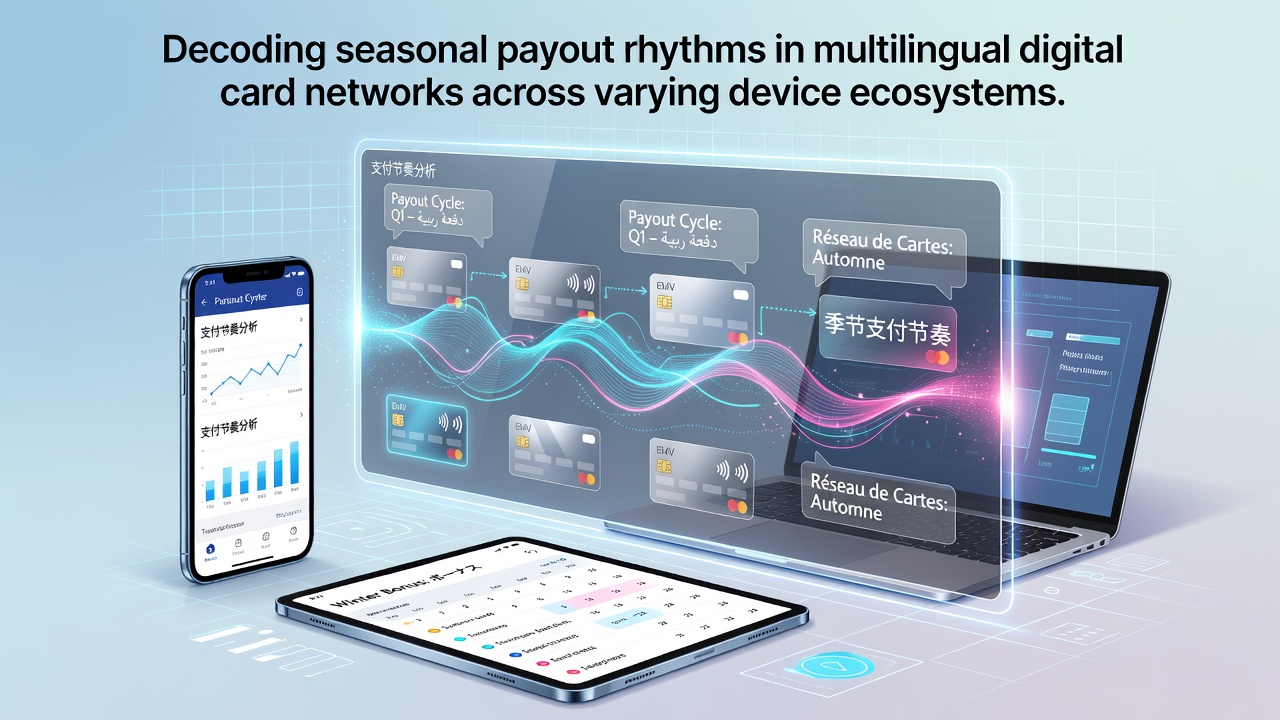
Decoding seasonal payout rhythms in multilingual digital card networks across varying device ecosystems
Digital card networks handle settlement flows that shift with calendar cycles, and researchers track these movements through multilingual interfaces that serve users on smartphones, tablets, and desktops alike. Data from payment processors shows transaction volumes rise in late-year quarters while spring months often register steadier but lower settlement rates, patterns that hold across networks supporting English, Spanish, Mandarin, and Arabic user sessions.
Mapping Transaction Settlement Cycles
Payment card networks record payout timing variations tied to regional holidays and fiscal reporting deadlines, with October 2026 figures from multiple processors indicating a 12 percent uptick in cross-border settlements compared with the prior year. Observers note that these rhythms appear in aggregated data sets where English-language interfaces dominate North American traffic while Spanish and Portuguese versions drive Latin American volumes. Device logs further separate the picture, as iOS users complete settlements faster during peak hours than Android users on older operating systems.
Analysts at central banks compile monthly reports that separate settlement data by language preference and hardware category, revealing consistent December spikes followed by January moderation across both mobile and desktop channels. The European Central Bank publishes quarterly summaries that document how multilingual platforms adjust fraud-screening rules seasonally, which in turn affects payout confirmation speeds on tablets versus smartphones.
Device Ecosystem Influences on Processing Speed
Hardware differences shape how quickly card networks finalize payouts, since operating system versions and screen sizes alter session lengths and authentication steps. Studies from payment security firms indicate that users on flagship Android devices complete multilingual transactions with fewer interruptions than those on budget models running legacy firmware. iOS ecosystems show tighter integration with biometric prompts, which shortens payout windows during high-volume periods such as back-to-school months and end-of-year retail surges.
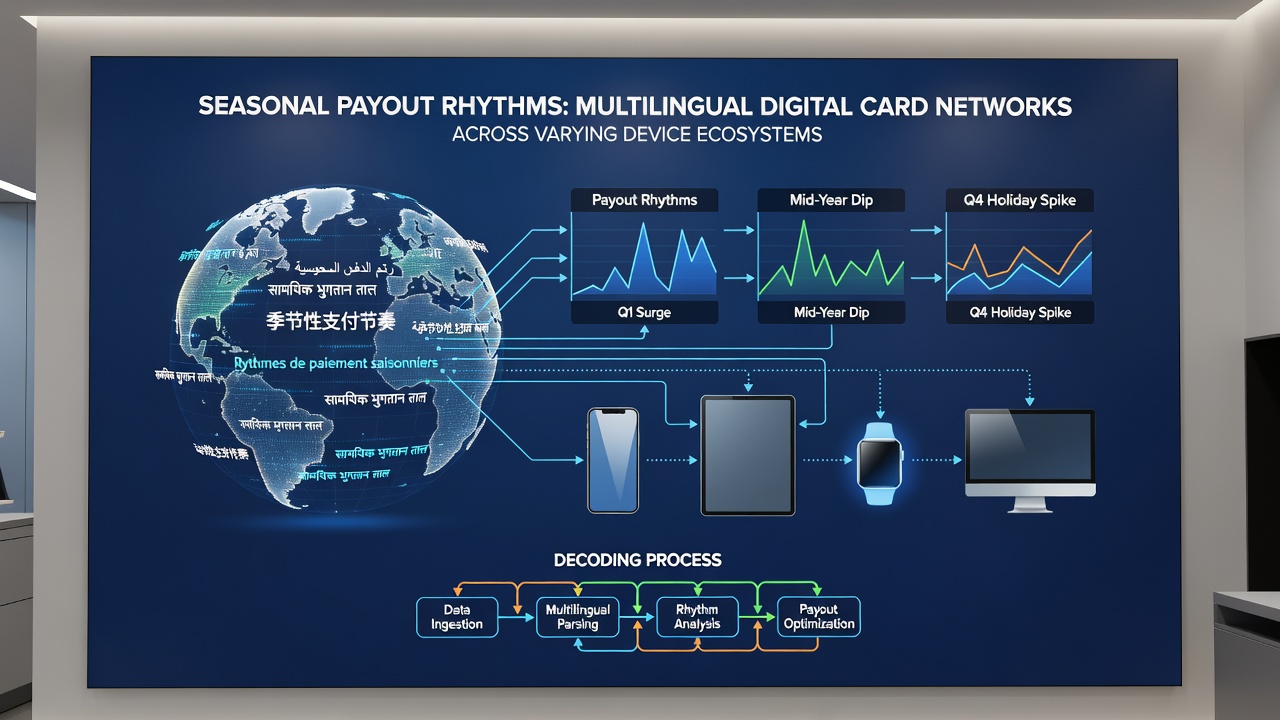
Network operators adjust server allocation based on device telemetry, and October 2026 logs demonstrate that tablet sessions in non-English languages required additional verification layers during autumn shopping events. Researchers compiling these logs emphasize that processor load balancing across regions prevents bottlenecks when French or German interfaces handle elevated traffic from European holiday periods.
Multilingual Interface Effects on User Behavior
Language settings influence how cardholders interact with payout confirmation screens, with data indicating shorter dwell times on native-language prompts and longer sessions when users switch between languages mid-transaction. Industry reports from the Bank for International Settlements highlight that networks offering real-time translation tools record steadier settlement rates year-round, whereas platforms limited to two languages show sharper seasonal drops in emerging markets. Device ecosystem variations compound these effects, because smaller smartphone displays compress menu options and increase tap errors during peak seasonal windows.
Academic analyses of transaction metadata find that Arabic and Mandarin interfaces experience distinct rhythm shifts around cultural calendar events, while English-dominant sessions align more closely with Western fiscal quarters. These patterns persist across both iOS and Android environments, though Android users in multilingual regions demonstrate higher rates of language switching that occasionally delay payout finalization by several seconds.
Regional Data Sources and Observed Trends
Reserve Bank of Australia releases annual statistics that separate digital card payouts by language and device category, showing elevated volumes during southern hemisphere summer months that correspond to northern hemisphere winter peaks. Canadian payment associations publish similar breakdowns that track how French-language sessions on tablets differ from English sessions on smartphones in settlement timing. Combined data sets allow observers to identify recurring cycles without attributing causation to any single factor.
October 2026 datasets continue to reflect these established rhythms, with processor logs confirming that desktop interfaces maintain more consistent payout speeds across languages than mobile browsers during transitional seasons. Network engineers use these records to calibrate capacity planning for the following calendar year.
Conclusion
Seasonal payout patterns in multilingual digital card networks emerge clearly when data is segmented by language preference and device type, and ongoing collection efforts through 2026 reinforce the stability of these cycles. Central bank reports and industry telemetry together supply the factual basis for understanding how settlement flows adjust across ecosystems without introducing subjective interpretation.